
Urethane Cement Flooring in Pittsburg, CA - a floor that handles water, heat and hard use
Coating peeling or chipping under water, heat or harsh cleaners? We put down a thick floor made for rooms like that.
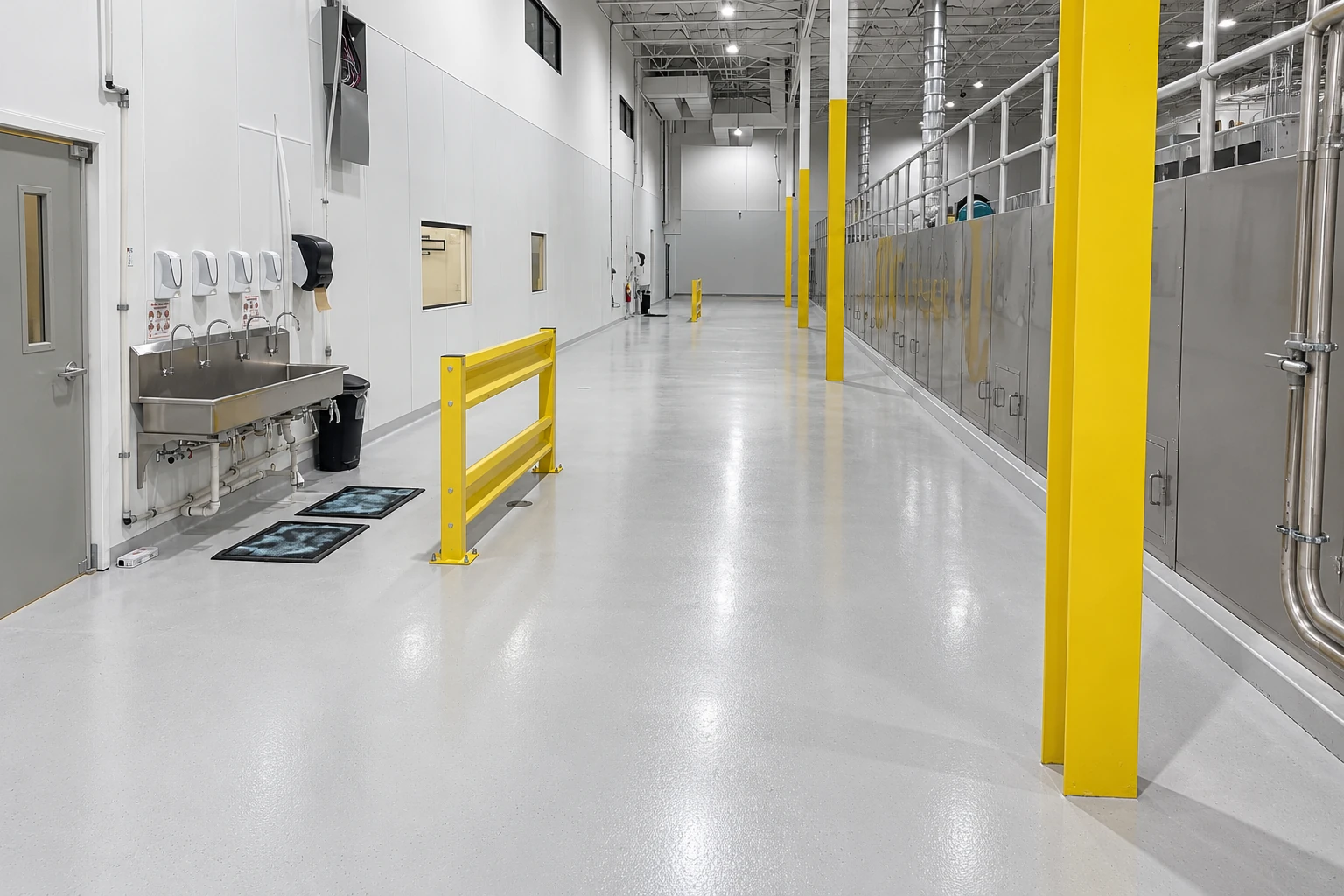
When does a floor need urethane cement instead of epoxy?
Urethane cement flooring is a thick floor made from a urethane binder mixed with Portland cement and graded aggregate. In Pittsburg we put it down in garages, shops and work rooms that get washed down, heated and cooled, splashed with cleaners or knocked around hard enough to wear out a thin coating.
A lot of the calls I get for this floor start with a coating that's already failing. Your price comes down to how big the room is, what has to come off the slab first, how much the concrete needs fixing, how thick a build the room calls for and whether the floor runs up the walls. The schedule turns on how dry the slab is and how long the system needs before you can use the room again. Urethane cement makes sense where a floor sees water, heat swings or harsh cleaners, and plain epoxy may do fine in a calm, dry room. We'll tell you which one your room really needs, even when it's the cheaper choice. If you mainly want a good-looking floor in a dry space, polished concrete or stained concrete may suit it better. The estimate gives you the figure for your own floor.
How can you tell your floor needs something tougher?
Most floors I'm called out to have already been sending signals for a while. These are the signs I look for when a thin coating isn't holding up to the room it's in.
Coating peeling up in sheets near a drain or wash-down spot usually means water is getting underneath.
Bubbles or blisters rising in the finish often point to moisture pushing up through the slab.
Chips and gouges where carts roll or tools drop mean the coating is too thin for the impact.
Cracking or lifting near ovens, hot water or freezers usually comes from the floor heating and cooling over and over.
Soft, dull or stained patches where cleaners or chemicals sit show the finish isn't standing up to them.
A floor you've already recoated more than once is usually telling you the room needs a tougher system.
Call when you first see lifting edges or bare concrete. Water and cleaners get under a loose edge, and the repair grows the longer it sits.
What happens after you call us about urethane cement?
I look at your floor myself and our own installers do the work. Here's how a job runs, from your first call to the walk-through at the end.
Call or send a message
Tell us what kind of room it is and what's going wrong with the floor now. We'll set a time for me to come out and see it.
I check the slab myself
I check the concrete for moisture and old coatings, and I ask how the room gets used, whether it's wet, hot or hit hard. You get a written estimate that names the floor I'd put down and the prep it needs, and if plain epoxy will do the job, the estimate says so.
Our crew preps and installs
Our installers take off what's failing and repair the concrete before any mortar goes down, and I'm on the job for that prep. Then the crew puts the system down, and I check in through the rest of the work.
We walk the floor together
When it's done, I walk the finished floor with you and go over when it can take foot traffic and equipment again. I'll also tell you how to keep it clean so it lasts.
Get a written estimate for your urethane cement floor
Send the room size, how it's used and photos of any cracks, and we'll reply within one business day. I'll come out, check the slab and give you a free written estimate, with no pressure and no obligation.
- Call
- (925) 318-8041
- Hours
- Mon–Fri: 7 AM–11 PM, Sat–Sun: 8 AM–10 PM
Urethane cement builds, texture and wall edges
The thick layer is what sets urethane cement apart. It takes hard knocks, and it can bridge small flaws in the concrete under it instead of showing every one. One maker says it also handles quick temperature changes without cracking or peeling away, because it expands and contracts along with the slab. That's why it suits rooms near hot water, ovens or cold storage.
On a floor that stays wet, a gritty aggregate can be scattered into the mortar while it's still wet, so the cured surface has some grip underfoot. A cove base, the curved edge where floor meets wall, is formed from the same mortar in the same install. That leaves no seam at the wall for water to sit in, and the more wall it runs along, the more it adds to the job.
In California, the state licensing board defines a flooring contractor as one who preps any surface for flooring and installs flooring of any material except ceramic tile. We're licensed and fully insured. Local air districts also limit the fumes some coatings and solvents give off, so what goes on your floor has to meet those limits. We're based in Pittsburg and work in many cities around it, including Antioch, Concord, Brentwood and Walnut Creek.
Urethane cement flooring questions from Pittsburg owners
How does urethane cement compare with epoxy flooring?
Urethane cement is the tougher choice for wet processing, harsh chemicals, heavy abuse and rooms that heat up and cool down over and over. Epoxy usually serves a dry room with an even temperature and moderate traffic. One urethane cement maker says epoxy does that calmer job for less money, so if your room is the calm kind, I'll tell you so.
How long does a urethane cement floor last?
One installer puts a urethane cement floor at 15 to 20 years or more in service, while epoxy in the same hard-used room gets recoated or replaced at least twice in that time. Each of those redos means tearing out the old floor and losing the room again, and the first quote never shows that cost. Our work is backed by our satisfaction guarantee.
Why do two quotes for the same urethane cement floor come out so different?
Usually it's the prep. One installer says removing a failed coating and repairing chipped or cracked concrete are where quotes for the same floor most often split. It also helps to ask whether each quote is for a light slurry, a thin pourable coat or a trowel-applied build, since a troweled floor carries more material and labor. My written estimate spells out the prep and the build so you can compare them side by side.
What causes a new floor to blister on a damp concrete slab?
Moisture inside the concrete does it, because it has to drop to acceptable levels before a coating or floor goes on, or it can cause blistering, a failed bond or mold. One maker calls urethane cement highly tolerant of moisture, but I still check the slab first. Damp slabs and bad prep are behind most of the failed floors I've seen.
How long does urethane cement take before I can use the floor again?
One installer says trowel-applied systems, spread by hand, take 48 to 72 hours to go back into service, and self-leveling ones take about 24 hours. If you need the room back fast, ask me which kind your floor calls for, and we'll plan the work around that.
How do I know if urethane cement is right for my garage in Pittsburg?
It's right when the garage works like a shop, with frequent wash-downs, dropped tools, spilled chemicals or big temperature swings. The material was made for commercial and industrial floors, so at home it fits rooms with those same demands. In a dry garage that mostly parks cars, epoxy usually does the job for less.
Other concrete floors that may suit your room
Polished Concrete Flooring
If the room stays dry and you want bare concrete with a shine and no coating to peel, polished concrete is often the simpler floor for it.
Stained Concrete Flooring
When the slab is sound and you care more about color than toughness, stained concrete gives the floor a warm, mottled look that suits living spaces.
Get your slab checked before you choose
Call (925) 318-8041 any day of the week, evenings included, or use our contact form. I'll find out what your slab can handle before you pay for a floor it can't hold.
Mon–Fri: 7 AM–11 PM, Sat–Sun: 8 AM–10 PM