
Basement flooring in Pittsburg CA - a floor picked to suit your slab's moisture
Musty smell, lifting tiles or damp carpet? We test the slab first, deal with the dampness, then put down a floor that suits it.
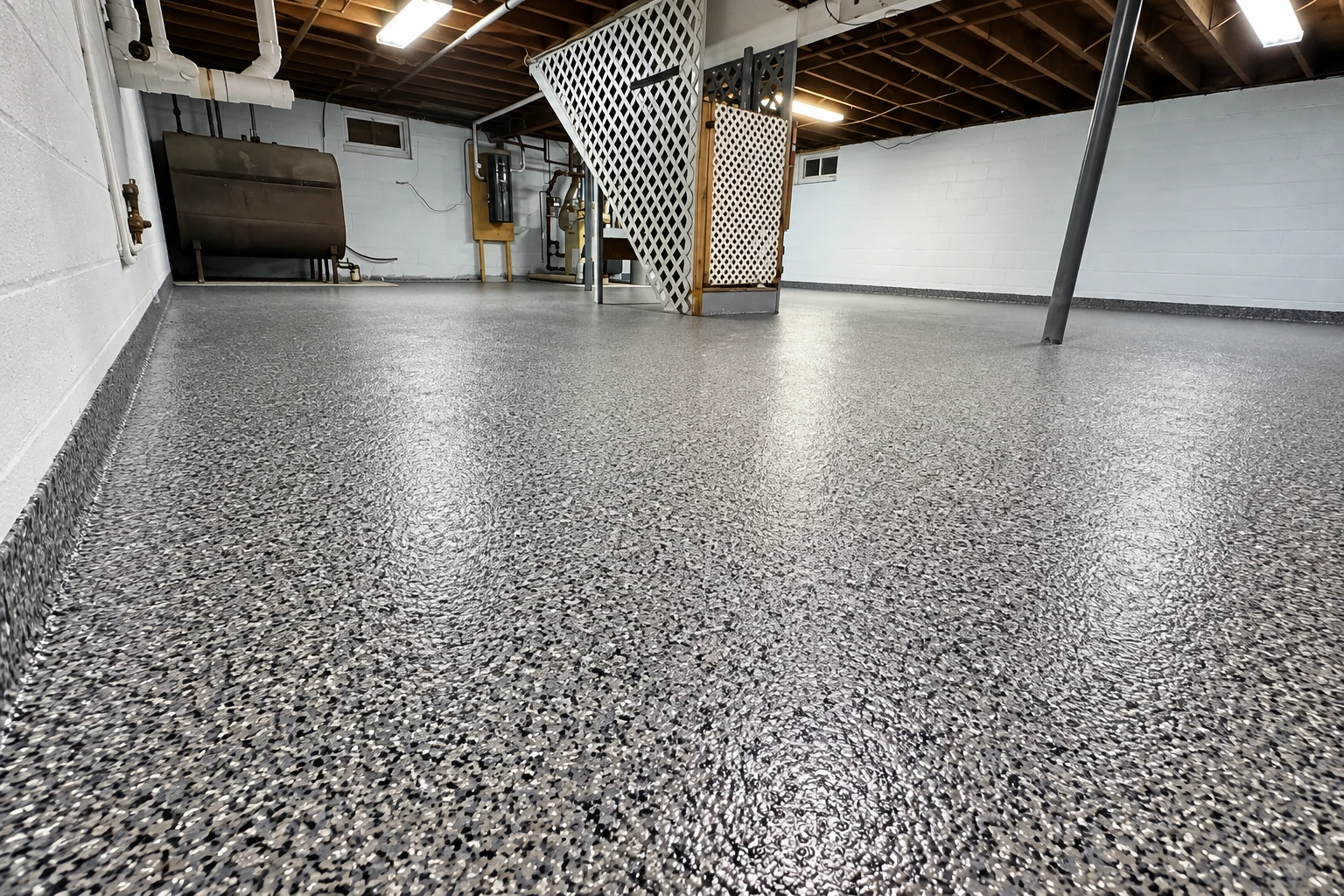
What floor will hold up in a Pittsburg basement?
Basement flooring in Pittsburg, CA means preparing the concrete slab and putting down a floor that suits it, whether that's a coating, sealed concrete, vinyl sheet or tile, carpet or wood. The slab's moisture decides which of those will last.
Most failed basement floors I've seen went wrong before anything was laid, usually on a damp slab nobody tested, so we test the slab before we talk about materials. Price and schedule mostly turn on what the slab needs before the floor goes on: drying time or a moisture treatment, pulling up old flooring, grinding and surface prep and crack repair. After that come the room's size and the floor you choose. Your written estimate lays out each of those for your basement. We're licensed and fully insured, based in Pittsburg and working in many cities around it, including Antioch, Concord, Brentwood and Walnut Creek.
How can you tell your basement floor needs work?
Most basement floor trouble starts with moisture coming up through the concrete, and it usually shows up in a few familiar ways before the floor gives out completely.
A musty smell that hangs around the basement usually means moisture is coming up through the slab or walls.
White, chalky powder on bare concrete is usually salt left behind as water moves through the slab and dries.
Vinyl tiles or sheet flooring lifting at the seams often means the glue has let go on a damp slab.
Carpet that feels cool and damp, or smells worse after a rain, is usually holding moisture from the concrete below.
Paint or an old coating peeling off in patches usually points to moisture or poor prep underneath it.
Cracks you can see or feel underfoot let moisture through and need repair before a new floor goes down.
Call before you buy flooring, because the slab readings decide what will hold up, and a floor bought first can turn out wrong for your basement.
What happens when you call us about a basement floor?
I'd rather be straight with you about what your slab can take before we talk about any floor, so the visit starts with testing and the price comes after.
Call or send the form
You reach us at (925) 318-8041 or through the form, and we set a time for me to come see the basement. Tell us what's on the floor now, because old flooring changes what I check.
I test and check the slab
I come out myself, take moisture readings, look for old coatings, glue and cracks, and ask how you use the room. You get a written estimate with the readings, what the slab needs first and the floor I'd suggest, so you can see where the money goes before you decide.
Our crew preps the slab
Our own installers handle the dampness, old flooring and cracks before any new floor goes down, and I'm on the job for the prep. This is the step that decides whether the floor holds.
We install and walk it
The crew puts the floor down while I check in, and then I walk the finished floor with you. The work is backed by our satisfaction guarantee.
Get your basement slab tested and a written floor estimate
We reply within 1 business day to set a time. I come out, test the slab and give you a free written estimate in person, with no pressure and no obligation.
- Call
- (925) 318-8041
- Hours
- Mon–Fri: 7 AM–11 PM, Sat–Sun: 8 AM–10 PM
Basement floor choices and what the slab decides
On a basement slab we usually look first at coatings and finished concrete, because there's nothing on top to rot or trap water. An epoxy or polyaspartic coating gives you a hard floor you can wash, and if you'd rather keep bare concrete, concrete sealing helps it resist spills. A coating still needs a dry enough slab, since moisture pushing up from below is one of the most common reasons I've seen coatings peel.
If you want something softer underfoot, vinyl sheet or tile, carpet and wood can all work in a basement once the readings say so. For wood below ground level, an older edition of the wood flooring association's guidelines recommends a vapor retarder, a layer over the slab that blocks moisture, on every below-grade job. I'll tell you which of these your slab can handle and which it can't.
Old flooring often has to come up first. One installation guide warns that pulling up old resilient flooring, the vinyl kind, can raise asbestos and silica hazards, and it points to the flooring industry's recommended work practices, so we plan removal as its own step. Once the slab is bare we deal with cracks, and they matter beyond the floor, because radon gas can move through soil and slab cracks and build up indoors.
Basement flooring questions we hear in Pittsburg
Do I need to test my basement slab for moisture before new flooring?
Yes. The wood flooring guidelines call moisture testing a required step on every job, whatever the conditions, so problems you don't know about turn into ones you can fix. One engineered wood maker also makes the installer responsible for testing and requires the documented results to go to the homeowner before installation. That's why the readings are the first thing I take at your estimate.
What is the best flooring for a basement, engineered hardwood or laminate?
Engineered hardwood handles moisture better than laminate, but it isn't fully moisture resistant, and laminate isn't moisture resistant at all. Laminate is the more affordable, easier install, but it can't be refinished and it's hard to repair, which matters in a room where water can come back. Engineered hardwood can be refinished once or twice, and with either one the slab readings come first.
Is a waterproof floor enough in a damp basement?
No. One vinyl plank maker says its waterproof floors aren't meant to work as a moisture barrier, so moisture problems have to be found and fixed before installation. For glued floors, one installation guide says a slab that tests above the adhesive's limit has to dry longer or get a moisture-mitigation system first. That's why we deal with the dampness before any floor goes down.
Who installs tile floors in California?
A licensed ceramic and mosaic tile contractor, which the state classifies as C-54. The C-15 flooring classification covers preparing surfaces and installing floors like carpet, vinyl and wood, but it leaves ceramic tile out. You can look up a contractor's classification with the state licensing board before you hire.
How much does it cost to put a new floor in a basement in Pittsburg, CA?
The cost comes down mostly to what your slab needs before the floor goes on, then the floor itself and the size of the room. A slab that tests dry with nothing to remove keeps the prep small, while a damp slab that needs treatment, or old vinyl and glue that have to come up, adds steps. I'll give you a written estimate after testing, so you know your number before anything starts.
How long does a basement floor installation take?
The schedule turns more on the slab than on the floor, because any drying or moisture treatment comes before the new floor goes down. If you pick wood, the wood flooring guidelines say your heating, cooling, humidifier or dehumidifier should run at least 5 days before the flooring is delivered, so plan that window in. Your estimate puts the steps in order so you can see what comes when.
Related concrete work for basement floors
Concrete Grinding & Surface Preparation
If your basement slab carries old paint, glue or rough patches, grinding gets it back to clean concrete so a coating or new floor can bond.
Concrete Sealing
If the readings come back fine and you'd like to keep the bare concrete, a sealer helps it shed spills and dust in a storage room or workshop.
Get your basement slab tested first
Call (925) 318-8041 or send the form with the basement's size, what's on the floor now and any damp spots you've noticed, and I'll come ready to test for them.
Mon–Fri: 7 AM–11 PM, Sat–Sun: 8 AM–10 PM