Commercial & Industrial Epoxy Floor Coatings in Pittsburg CA - a floor built for hard use
Coating peeling under forklifts or wearing through at the dock? We test the slab, plan around your shutdown and put down a floor that holds.
What goes into an epoxy floor for a Pittsburg shop or warehouse?
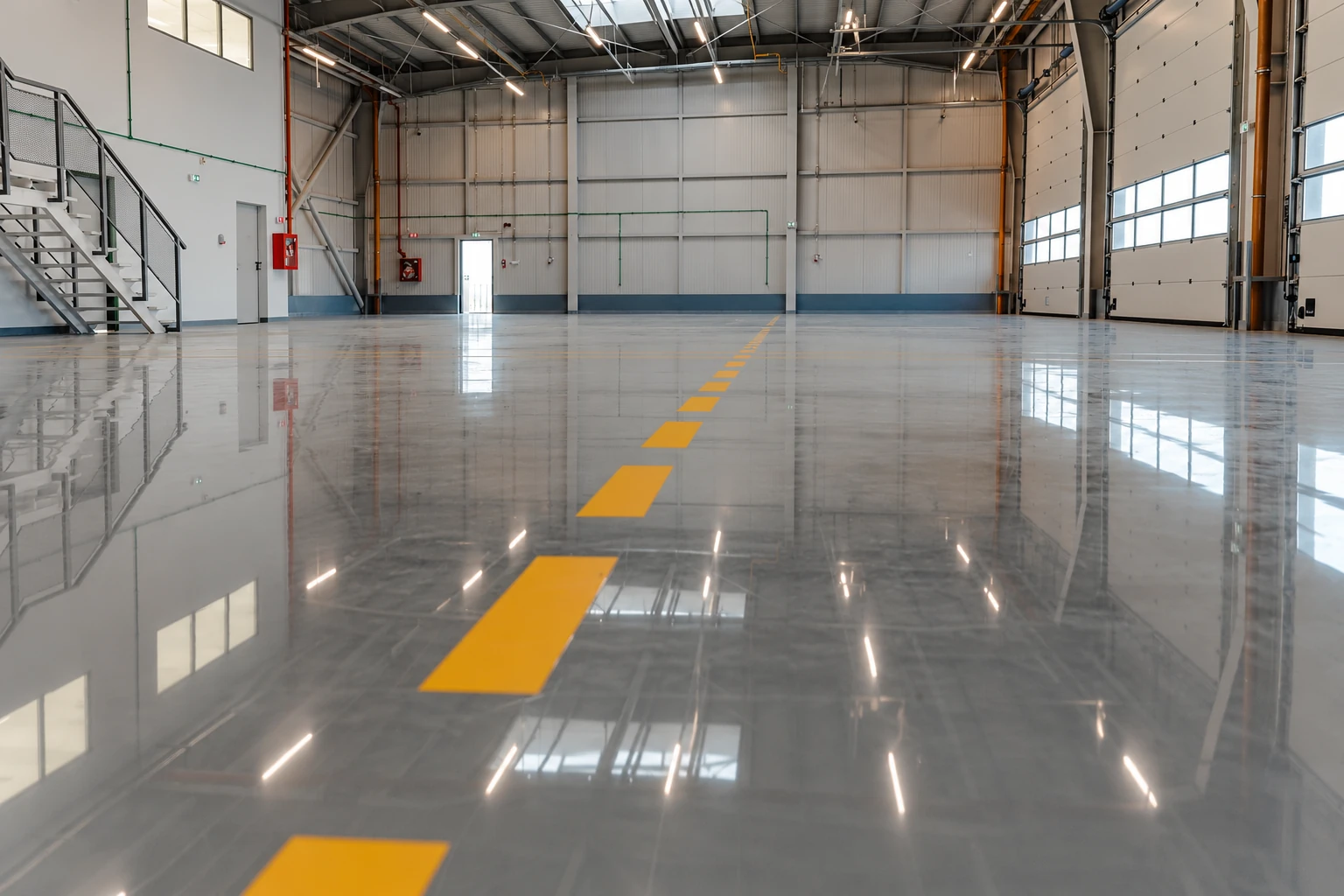
Commercial and industrial epoxy floor coatings in Pittsburg, CA are layered systems built over the concrete in shops, warehouses and work areas, from a primer through the epoxy and grit to a topcoat, so the slab stands up to traffic, spills and regular washing.
If you run a shop, a warehouse or a small plant, you're usually weighing which floor will stand up to your forklifts and spills against how many days you can afford to close. The price mostly turns on how much prep the slab needs, whether there's a moisture problem, the safety and lane lines you want striped, and the schedule. The schedule turns on your shutdown window and how the floor gets washed, so we plan the system around both before I put a number on it in a written estimate. We're based in Pittsburg and work in many cities around it, including Antioch, Concord, Brentwood and Walnut Creek, and our crew does home garage floor coatings too.
How do you know a shop or warehouse floor needs a coating?
Most commercial floors tell you they're in trouble well before they fail outright. These are the things owners and managers usually notice first, and what each one tends to mean about the slab underneath.
Coating peeling or flaking in forklift lanes, which usually means the prep under it wasn't right.
Bubbles, blisters or a white powder under the coating, often a sign of moisture coming up through the slab.
Bare concrete showing through at doorways and aisles, where the topcoat has worn off and the slab is next.
Concrete dust settling on stock and shelving, because a bare slab keeps wearing and shedding under traffic.
Oil, coolant or chemical stains that soak in and won't scrub out, which means nothing is sealing the concrete.
A floor that turns slick when it's wet or greasy, usually because the topcoat has no grit in it.
Call rather than wait once coating starts lifting where forklifts or carts run, because loose edges keep catching and the bare patch keeps growing.
What happens after you call us about a commercial floor?
I handle the visit and the estimate myself, and our own installers do the work, so the person who looked at your slab is the one on site when it gets prepped.
Call or send a message
Call (925) 318-8041 or use the form, and tell us roughly how many square feet the floor is, how old the slab is, how it gets cleaned and how many days you can close. We'll set a time for me to come out.
I look at the slab
I check the slab, test for moisture and look for old coatings, and we talk through your traffic, your chemicals and how the floor gets washed. You get a written estimate with the system, the prep and a schedule built around the days you can close, so the moisture and prep work are in the number from the start.
We prep and coat it
Our own installers grind and prep the concrete first, with me on the job for that part, then put the system down coat by coat during your closure. I check in through the rest of the job, so you always know who to ask if something comes up.
Walk the finished floor together
I walk the finished floor with you before your people and equipment move back in, and we go over when it can take full traffic and how to clean it. The work is backed by our satisfaction guarantee.
Get a written estimate for your shop or warehouse floor
We reply within one business day to set up a free on-site visit, where I look at the slab and give you a written estimate. No pressure, no obligation.
- Call
- (925) 318-8041
- Hours
- Mon–Fri: 7 AM–11 PM, Sat–Sun: 8 AM–10 PM
Epoxy systems, prep and topcoats for working floors
Commercial epoxy comes in weights, and the weight sets much of the price. A thin-film coating at the low end suits light traffic and storage, a high-build system is the usual pick for warehouses and shops, and epoxy mortar, a troweled mix of resin and sand, sits at the top for kitchens and food plants. I'd rather match the weight to how you really use the floor than sell you the heaviest one.
Every system starts with the slab. We grind the concrete so the primer can bite into clean, open pores, and we deal with old coatings and oil first, because coating over a weak surface is how most of the failed floors I've seen went wrong. The grit we scatter into the coats and the topcoat get picked for how you clean, since a floor scrubbed by machine needs a different texture than one that's mopped.
Epoxy isn't the only option. Polyaspartic floor coatings cure faster, which helps when you can't close for long, and urethane cement is the other heavy-duty choice we talk through. One flooring contractor's guide points out that polyaspartic isn't an automatic swap for a thick epoxy mortar or urethane cement system, and it won't fix moisture, unstable concrete or poor prep either, so we look at the slab before we pick.
Commercial epoxy floor questions from Pittsburg owners
How much does commercial epoxy flooring cost per square foot?
Installed commercial epoxy flooring across the US usually costs about $3 to $12 per square foot. That's a national range for the whole installed floor, not our price, and where yours lands depends on the slab and the system covered above. I'll give you your own figure in a written estimate after I've looked at the floor.
What should I check when hiring a commercial epoxy floor contractor in California?
Check that the contractor holds a California license and ask how they'll control dust when they grind your slab. The state licensing board describes a flooring contractor as one who prepares surfaces and installs flooring, and a painting contractor as one who applies paints and similar materials to protect and waterproof structures. California safety rules require a dust reduction system whenever powered tools grind, cut, core or drill concrete, so a bid that grinds the slab includes one. We're licensed and fully insured.
How long does a warehouse floor have to stay closed for epoxy?
A traditional epoxy system can take 3 to 7 days before the floor takes full traffic, so plan your closure around that. Every day closed costs you money, which is why I ask how many days you can shut down before I pick a system, and if the window is very short we'll compare the faster-curing options mentioned above.
Why do you test concrete for moisture before an epoxy floor?
Because skipping moisture work is one of the most common reasons commercial coatings fail, and you can't fix what you haven't measured. One coating maker's application guide calls for concrete without excessive moisture before epoxy goes on, so I take readings at the estimate and price any moisture work up front. The same guide says new concrete must be at least 28 days old before coating, so a new building plans the floor after that wait.
How long does a commercial epoxy floor last?
A properly specified and installed system lasts 10 to 20 years. Heavy-traffic areas may need a fresh topcoat every 5 to 7 years, so it's worth budgeting for that recoat from the start rather than being surprised by it.
What is the best way to choose between epoxy and other floor coatings for a shop?
Start with how the floor gets used, because one flooring contractor's guide says conventional epoxy may not be the strongest choice with hot-water washdowns, severe temperature swings, constant sunlight or major slab movement. Sites like that, or ones with a very short shutdown window, compare other coating types before choosing. The same guide suggests asking each bidder what type of epoxy they specify, at what thickness, over which primer, and with which grit and topcoat.
Related floor coatings we also install
Garage Floor Coatings
If you also want your home garage done, or a small shop garage that sees cars more than forklifts, a garage coating is built for that lighter use.
Polyaspartic Floor Coatings
When your business can only close for a short stretch, a faster-curing coating may fit, as long as the slab and the work suit it.
Book a look at your shop floor
We answer until 11 PM on weekdays and 10 PM on weekends, so call (925) 318-8041 after your shift or send the form whenever it suits you.
Mon–Fri: 7 AM–11 PM, Sat–Sun: 8 AM–10 PM